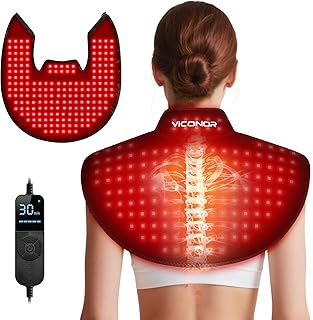
Red light therapy has become a popular option for people who want to support skin health, recovery, and overall wellness from home. But do the best red light therapy benefits live up to the attention they receive?
Red light therapy may be worth trying at home when you choose an appropriate device, use it consistently, and keep your expectations realistic. Research on photobiomodulation suggests potential benefits for several health and cosmetic concerns, although results can vary by condition, wavelength, dose, and device.
For people exploring at-home wellness solutions, infrared light-therapy offers another way to learn about red and near-infrared light devices before choosing a product.
What Is Red Light Therapy?
Red light therapy, also called photobiomodulation (PBM) or low-level light therapy, uses specific wavelengths of red or near-infrared light to interact with cells. It is non-invasive and does not use ultraviolet radiation.
At-home devices commonly include LED masks, panels, lamps, and targeted devices. Research has explored PBM for skin concerns, hair loss, pain, wound healing, and other health outcomes.
The important point is that red light therapy is not a one-size-fits-all treatment. Different goals may require different wavelengths, treatment times, and energy levels.
What Are the Best Red Light Therapy Benefits?
The best red light therapy benefits depend on the goal and the quality of the evidence available.
Supports Healthier-Looking Skin
Red light therapy is widely studied for cosmetic skin concerns. Research suggests it may help improve the appearance of fine lines, wrinkles, uneven tone, redness, and rough skin when used consistently.
It may also support normal cellular activity involved in skin repair. However, results are usually gradual rather than instant.
May Support Hair Growth
Photobiomodulation has been studied for androgenetic alopecia, commonly known as pattern hair loss. A 2026 umbrella review found moderate-certainty evidence supporting improvements in hair density for androgenetic alopecia.
This does not mean every red-light device will produce the same result. Device design, wavelength, treatment schedule, and individual factors matter.
May Help With Exercise Recovery
One of the interesting red light therapy benefits is its potential role in recovery from fatigue.
A systematic review of studies in healthy individuals found that photobiomodulation may support fatigue recovery, although it did not show convincing evidence that it improves strength or overall functional capacity.
For active adults, this makes red light therapy an area worth watching—but it should complement, not replace, sleep, nutrition, hydration, and sensible training.
May Support Pain Management
Research has investigated PBM for several pain-related conditions. For example, a 2024 systematic review found that PBM reduced pain intensity in people with knee osteoarthritis, but the certainty of evidence was very low.
This is an important distinction: promising research does not mean red light therapy should replace medical treatment.
May Support Tissue Repair
Photobiomodulation has also been investigated for wound healing and tissue-related applications. An international expert consensus published in 2026 identified several clinical applications where evidence supported PBM, including certain ulcers, peripheral neuropathy, and acute radiation dermatitis.
These medical applications should be discussed with a qualified healthcare professional rather than treated as a general home remedy.
How to Use Red Light Therapy at Home
For a simple routine:
- Choose a suitable device for your intended goal.
- Read the manufacturer’s instructions before your first session.
- Use the recommended distance and session length.
- Keep your routine consistent instead of using the device excessively.
- Protect your eyes if the device instructions recommend eye protection.
- Track your progress with photos or notes over several weeks.
- Stop if you develop unusual irritation or discomfort and seek professional advice when appropriate.
Practical Tips for Better Results
If you are considering a home device from infrared light-therapy, keep these practical points in mind:
- Check the wavelengths listed by the manufacturer.
- Look for clear instructions on treatment distance and duration.
- Choose a device designed for your specific treatment area.
- Follow the recommended schedule.
- Do not assume stronger light automatically means better results.
- Take before-and-after photos under similar lighting.
- Give the routine enough time before judging the results.
Common Mistakes to Avoid
Many disappointing experiences come from unrealistic expectations or poor device use.
Avoid these common mistakes:
- Using the device for much longer than recommended.
- Expecting visible results after one or two sessions.
- Buying a device without checking its specifications.
- Treating red light as a replacement for professional medical care.
- Ignoring eye-safety instructions.
- Assuming every red-light product works in exactly the same way.
Expert Insights
A 2026 umbrella review examined 15 meta-analyses covering 204 randomized controlled trials and more than 9,000 participants. It found significant effects for several outcomes, but many other outcomes had low or very low certainty because of differences between studies and other limitations.
This tells us something important: red light therapy is promising, but the science is still developing.
Home-use research also highlights differences in wavelength, energy dose, treatment duration, and device design. These differences make it difficult to compare products simply by looking at marketing claims.
For skin-related use, the American Academy of Dermatology recommends following device instructions and considering professional guidance, particularly when treating specific skin or hair concerns.
Is Red Light Therapy Worth Trying at Home?
Red light therapy can be worth trying at home if you want a non-invasive wellness option and understand what it can,and cannot,do. The strongest approach is to choose a suitable device, follow its instructions, use it consistently, and judge results realistically.
The best red light therapy benefits are not necessarily dramatic overnight changes. Depending on the application, the potential value may come from gradual improvements in skin appearance, hair density, recovery, or certain pain-related outcomes.
For consumers researching home devices, infraredlight-therapy can be a useful starting point for exploring red and near-infrared light therapy options.
Ready to Explore Red Light Therapy?
If you are considering adding light therapy to your home wellness routine, explore the available options at infraredlight-therapy and choose a device based on your specific goals, treatment area, and manufacturer’s usage guidance.
The right device, realistic expectations, and consistent use can make your experience much more practical.
Frequently Asked Questions
What are the best red light therapy benefits?
The best red light therapy benefits may include supporting healthier-looking skin, hair density, recovery from fatigue, and certain pain-related outcomes. However, evidence varies by condition, device, wavelength, and treatment protocol, so benefits should not be considered guaranteed.
How often should I use red light therapy at home?
Use your device according to the manufacturer’s instructions because recommended frequency varies between products. More sessions or longer exposure are not automatically better. Following the specified treatment schedule is the safer approach.
Does red light therapy work for skin?
Research suggests red-light LED devices may provide subtle to noticeable improvements in some signs of skin aging, including fine lines, rough texture, redness, and discoloration. However, researchers still need more data on the ideal dose and long-term use of home devices.
Can red light therapy help with hair growth?
Some evidence supports photobiomodulation for androgenetic alopecia, with a 2026 umbrella review reporting moderate-certainty evidence for improved hair density. Results vary between individuals and devices, so it should not be viewed as a guaranteed hair-loss treatment.
Is red light therapy safe to use at home?
Short-term use appears generally well tolerated, and the American Academy of Dermatology reports that common side effects are usually mild. Follow the device instructions and use recommended eye protection. People with specific skin or health concerns should consider professional advice before use.
How long does it take to see red light therapy benefits?
Results depend on the goal, device, treatment schedule, and individual response. Cosmetic changes generally require consistent use over time rather than one or two sessions. Taking progress photos can help you evaluate gradual changes more objectively.
Can red light therapy replace medical treatment?
No. Red light therapy should not be used as a substitute for diagnosis, medication, surgery, physical therapy, or other recommended medical care. It may have a complementary role for some conditions, but evidence and treatment recommendations differ by application.